
The National Payments Corporation of India (NPCI) is set to consider linking the ATM interchange fee to the Wholesale Price Index (WPI), alongside a potential hike from the current 19 to 21-22, which could impact customer charges for transactions beyond the free limit.

Such a high level of WPI was last recorded in October 2012, when inflation was 7.4 per cent.

A 25-basis-point increase would restore some real monetary restraint when expected inflation has risen, liquidity remains easy and growth is strong, points out Amarendu Nandy.

The wholesale price-based inflation eased to a five-month low of 13.93 per cent in July on easing prices of food articles and manufactured products. The WPI-based inflation softened for the second consecutive month in July, raising hopes of further decline in wholesale prices in the months to come. The Wholesale Price Index-based inflation, after scaling a record high of 15.88 per cent in May, declined to 15.18 per cent in June. It was 13.43 per cent in February. It was 11.57 per cent in July last year.

The Indian rupee gained 2 paise to settle at 93.33 against the US dollar, driven by positive sentiment in domestic equity markets and renewed hopes for US-Iran talks, despite rising WPI and CPI inflation.

Inflation in food articles during May stood at 1.13 per cent, as against 2.55 per cent in April.

Mumbaikars are set to face a significant financial burden as the prices of milk, CNG, and taxi-rickshaw fares have all seen a substantial increase from September 1, 2026, impacting household budgets ahead of the crucial festive season.

The new Index of Industrial Production (IIP) series, which shifts the base year from 2011-12 to 2022-23 and is scheduled for release on June 1, will, for the first time, track rare earths and minor minerals, piped natural gas (PNG), and water supply, sewerage and waste management.

Petrol and diesel prices in India have been increased for the second time in a week, following a long freeze on revisions. The increase comes as global crude prices surge and state-run oil firms look to recoup losses.

Petrol and diesel prices in India have been increased by Rs 3 per litre each, marking the first rate hike in over four years. This decision follows a period of stable prices during recent state elections, despite rising global crude oil prices and significant losses for fuel retailers.

Wholesale inflation in the country rose marginally to 0.53 per cent in March compared to 0.20 per cent in the preceding month due to increase in prices of vegetables, potato, onion and crude oil. The Wholesale Price Index (WPI)-based inflation was in the negative zone from April to October and had turned positive in November at 0.26 per cent. The inflation in March 2023 was 1.41 per cent.

Bank of Baroda economists project India's GDP to grow 6.5-6.8 per cent in FY27 but warn that the fiscal deficit could overshoot the budgeted 4.3 per cent target, potentially reaching 4.7-4.8 per cent of GDP due to subsidy overruns, excise duty cuts, and oil marketing company losses.

Petrol and diesel prices have been increased by Rs 3 per litre each, marking the first hike in over four years, as state-run fuel retailers pass on some of the impact from surging global crude prices, which have been exacerbated by the Iran war.

If the conflict continues for a prolonged period, State-run oil companies may have to review retail fuel prices accordingly.

The wholesale price index (WPI)-based inflation eased in January to 0.27 per cent, mainly due to moderation in prices of food items. WPI inflation was at 0.73 per cent in December 2023. The WPI inflation was in the negative zone from April to October and had turned positive in November at 0.39 per cent.

Wholesale price inflation eased to 2.05 per cent in March, as against 2.38 per cent in February, government data showed on Tuesday. The wholesale price index (WPI) based inflation, however, rose year-on-year.

India's net oil import bill could rise by $56 billion to $64 billion annually assuming global crude averages $110 to $115 per barrel in FY27.
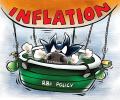
The Reserve Bank of India has increased its retail inflation projection for 2026-27 to 5.1 per cent, up from an earlier estimate of 4.6 per cent. This revision is primarily attributed to mounting input costs, driven by the pass-through of higher global energy prices to domestic petrol and diesel rates, which have seen significant increases since May.
The wholesale price-based inflation rate declined to (-) 4.12 per cent in June on easing prices of food, fuel and manufactured items. The wholesale price index (WPI) based inflation in May was (-) 3.48 per cent. In June last year, it was 16.23 per cent.

India is set to import 1 million tonnes of raw sugar at zero duty after domestic stocks fell sharply and prices surged ahead of the festival season.

India's new national accounts will leverage new data sources and surveys to enhance the measurement of the country's informal economy, and introduce double deflation methods across sectors, replacing the current system that relies on a single deflation mechanism in Gross Domestic Product (GDP) calculations.

The rupee fell 23 paise against the greenback to settle at a new all-time low of 91.01 (provisional) on Tuesday, weighed down by relentless foreign fund outflows, no breakthrough in India-US trade deal, and persistent US dollar buying.

Wholesale inflation rate declined marginally to 0.2 per cent in February compared to 0.27 per cent in the preceding month despite a slight uptick in the food basket. The Wholesale Price Index (WPI)-based inflation was in the negative zone from April to October and had turned positive in November at 0.26 per cent. The inflation in February 2023 was 3.85 per cent.

Indian benchmark indices, Sensex and Nifty, saw early gains, primarily driven by IT stocks, amidst expectations of a less aggressive monetary policy from the US Federal Reserve following softer inflation data. Global market trends and upcoming Q1 results are also influencing investor sentiment. Track Sensex, Nifty on july 16.

India's toll collection growth is projected to moderate to 5-7 per cent year-on-year in FY27, a 150-200 basis points reduction, primarily due to the economic impact of the West Asia conflict and a slowdown in commercial traffic, according to Crisil Ratings.

Wholesale inflation in the country rose for the fourth consecutive month in June at 3.36 per cent on account of rise in prices of food articles, especially vegetables and manufactured items. The wholesale price index (WPI) based inflation was 2.61 per cent in May. It was (-) 4.18 per cent in June 2023.

The National Pharmaceutical Pricing Authority will monitor how companies are increasing prices of non-scheduled drugs.

The wholesale price index (WPI)-based inflation rose in December at 0.73 per cent mainly due to a sharp rise in food prices. The WPI inflation was in the negative zone from April to October and had turned positive in November at 0.26 per cent.

WPI inflation data, trading activity of foreign investors and global cues would dictate trends in the stock market this week, analysts said.
The wholesale price index-based inflation remained in the negative territory for the seventh straight month in October at (-) 0.52 per cent, on easing prices of food items. The WPI-based inflation rate has been in the negative zone since April and was at (-) 0.26 per cent in September, 2023. In October last year, WPI was at 8.67 per cent.

The rupee plunged 26 paise to an all-time low of 90.75 against the US dollar in intra-day trade on Monday, weighed down by uncertainty over an India-US trade deal and persistent foreign fund outflows.

The wholesale price-based inflation declined to over two-year low of 3.85 per cent in January on easing prices of manufactured items, fuel and power, even though food articles remained expensive. This is the ninth straight month of decline in the rate of wholesale price-index (WPI) based inflation. The WPI inflation was 4.73 per cent in January and 13.43 per cent in February, last year.

The wholesale price index-based inflation remained in the negative territory for the sixth straight month in September at (-)0.26 per cent, on easing prices of food articles. The WPI-based inflation rate has been in the negative since April and was (-)0.52 per cent in August. In September last year, it was 10.55 per cent.

Chief economic adviser to the finance ministry Arvind Virmani on Wednesday said the retail price-based inflation, which is ruling above the wholesale price index, will come down with a lag but would not fall as much as the rate of rise in wholesale prices is falling.
The wholesale price-based inflation eased to a 29-month low of 1.34 per cent in March on easing prices of manufactured products and fuel items, even though food articles turned expensive.

Wholesale inflation fell to a 3-month low of 2.04 per cent in July on decline in prices of food items especially vegetables, government data released on Wednesday showed. The decline in wholesale price index (WPI) based inflation in July came after it rose for four months in a row till June, when it was 3.36 per cent. It was (-) 1.23 per cent in July last year. In April wholesale inflation stood at 1.19 per cent.

'Even last year, when India bought gold, the physical quantity was much less than the previous years.'
Wholesale inflation fell to a 4-month low of 1.31 per cent in August due to a decline in prices of vegetables and fuel, even though onion and potato prices spiked, according to official data released on Tuesday. Wholesale price index-based inflation fell for the second straight month in August after it hit a high of 3.43 per cent in May. Inflation in July was 2.04 per cent. In August last year, WPI inflation was (-) 0.46 per cent.

The present monthly inflation measurement system, based on the wholesale price index, reflects the price variations of 435 items.
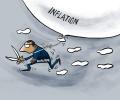
Wholesale price based inflation declined to a 3-month low of 1.89 per cent in November on cheaper food items, and experts predicted a 0.25 per cent interest rate cut by the RBI in the policy review in February. The Wholesale Price Index (WPI) based inflation was 2.36 per cent in October 2024. It was 0.39 per cent in November, last year. In August, 2024, it was 1.25 per cent.
